how to turn wifi on windows 10 hp laptop

Title: Fix HP Laptop Wi-Fi is Not Working Problem in Windows 1087
Channel: FIXsage
Fix HP Laptop Wi-Fi is Not Working Problem in Windows 1087 by FIXsage
how to turn wifi on windows 10 hp laptop, how to enable 5ghz wifi on windows 10 hp laptop, how to turn wifi back on hp laptop windows 10, how to turn on wifi on hp laptop windows 10 using keyboard, how to turn on wifi on hp pavilion laptop windows 10, how to turn on wifi on laptop windows 10
**HP Laptop WiFi Nightmare? This ONE Trick Turns It ON INSTANTLY!**
Tired of HP Laptop WiFi Woes? This Secret Weapon Brings You Back Online, FAST!
Ever felt like your HP laptop had a personal vendetta against the internet? That frustrating moment, when you desperately need Wi-Fi, and your connection stubbornly refuses to cooperate? I've been there. You're not alone. It's a common issue, but thankfully, there’s a solution. Let's ditch the despair and dive into a simple, yet effective, fix.
The Phantom WiFi: Unmasking the Culprit
Before we unleash the magic trick, let’s understand the enemy. Sometimes, the issue isn't a hardware failure or a complex technical glitch. It's often something far simpler and, frankly, more irritating. You might be dealing with disabled Wi-Fi, a driver problem, or an obscure software conflict. But before you panic, there is a simple fix to check! In fact, it's probably closer than you think.
The "Airplane Mode" Sabotage: A Stealthy Culprit
One of the most common culprits lurking in the shadow of connectivity problems is—you guessed it—Airplane Mode. It is easy to enable accidentally. We all do it sometimes. You may not even realize it's activated, but it's silently blocking your Wi-Fi signal. Consider it the Wi-Fi's most formidable foe. Think of Airplane Mode as a kill switch for all wireless communication.
The Instant Solution: Your WiFi's Savior
So, how do you vanquish the Airplane Mode villain and restore your internet access? The answer is remarkably simple. First, locate your keyboard's function keys. Look for a key with a Wi-Fi antenna symbol, often sharing space with an "F" key (like F2 or F12). Then, simply press the Function (Fn) key along with the Wi-Fi key. This action, more often than not, resurrects your wireless connection. It may seem too easy, but trust me, it often works.
Double-Check the Obvious: A Quick Reality Check
If that doesn't work, and it's still giving you trouble, don't fret! There are other factors to consider. First, cast a glance at your taskbar, the bar at the bottom of your screen. Is there a Wi-Fi icon present? If so, does it have an exclamation mark or a red "X" superimposed? If so, it likely indicates a problem. As a matter of fact, a missing or inactive icon means there could be other issues at play. Therefore, quickly check your physical switch!
Driver Drama: Addressing Software Conflicts
Sometimes, the root of the problem dives a bit deeper: the drivers. In essence, drivers are the software that allows your laptop to communicate with its hardware. Now, outdated or corrupted drivers can interfere with Wi-Fi connectivity. To rectify this, you'll need to update or reinstall your wireless adapter driver. You can find these in Device Manager. To get there, search for "Device Manager" in the Windows search bar. Then, expand "Network adapters," right-click your wireless adapter, and select "Update driver."
Restart, Then Conquer: Another Strategy
Still no luck? Don’t give up yet! It is also a good practice to try a system restart. A simple restart can often resolve minor software glitches. It's like a digital reset button. After restarting, check your Wi-Fi connection again.
Troubleshooting the Router: Eliminating External Factors
If your laptop continues to struggle, investigate the router. Sometimes, the issue lies outside your laptop. Is the router turned on? Is the internet light solid? If other devices connect, your laptop might be the problem. In that case, try restarting your router. Unplug it for 30 seconds, then plug it back in.
The Nuclear Option: Reinstalling the Network Adapter
If all else fails, reinstalling the network adapter driver is a good move. Go back to Device Manager. This time, right-click the wireless adapter and choose "Uninstall device." After uninstalling, restart your laptop. Windows will typically reinstall the driver automatically. However, you might need to download the latest driver from HP's website.
Final Thoughts: Staying Connected
In conclusion, dealing with HP laptop Wi-Fi problems can be infuriating. However, with a few simple troubleshooting steps, you can usually restore your connection quickly. Remember, start with the easy fixes. Often, just a simple key press or a reboot solves the problem. Also, keep your drivers updated, and consider your router. I sincerely trust these tips will help you reclaim your online life. Now go forth and conquer your Wi-Fi woes! Therefore, stay connected and enjoy a seamless online experience.
Laptop WiFi Not Connecting? This SHOCKING Trick Works!HP Laptop WiFi Nightmare? This ONE Trick Turns It ON INSTANTLY!
WiFi woes on your HP laptop? Ugh, we’ve all been there. Picture this: you’re finally settling in for a cozy night of streaming, or you're about to hop on that crucial video call, and… nothing. The dreaded “no internet connection” notification stares back at you, mocking your plans with its digital indifference. Sound familiar? Don't fret! We're diving deep into the frustrating world of HP laptop WiFi problems and, more importantly, how to instantly fix them. We're not talking about tedious troubleshooting guides that lead you down rabbit holes. This is about a simple, elegant solution – the one trick that often brings your WiFi back to life quicker than you can say "buffering."
1. The WiFi Wasteland: Why Does My HP Refuse to Connect?
Before we unleash the magic trick, let's understand why your HP laptop might be playing hard to get with the internet. Think of your laptop's WiFi card as a tiny radio receiver. It's constantly searching for a signal, a beacon of digital connection. But what can jam this signal? Several culprits:
- Software Glitches: Sometimes, a simple software hiccup can cause your WiFi to go AWOL. It's like a minor traffic jam on the information superhighway.
- Driver Issues: Your WiFi card needs a special piece of software, a "driver," to translate signals into something your laptop understands. Outdated or corrupted drivers are a common cause of WiFi dropouts. Imagine trying to speak a language you no longer know – your computer might be trying to connect, but it doesn't understand the instructions.
- Hardware Problems: While less common, the WiFi card itself could be faulty. This is like a busted antenna – no signal can get through.
- External Interference: Your WiFi signal is vulnerable. Microwaves, other wireless devices, and even thick walls can interfere with the signal, weakening or blocking it entirely. It's like trying to hear someone talking in a crowded room.
- Accidental Disablement: Let's not forget the simplest of all: sometimes, the WiFi is just switched off. Think of it like forgetting to plug in your phone.
2. Button Bash Bonanza: The Usual Suspects (and Why They Fail)
You've probably already tried the standard troubleshooting steps. We have, too! Let's run through the usual suspects:
- Restarting Your HP Laptop: The digital reboot. Often works, sometimes doesn't. It's like shaking a snow globe – sometimes it clears things up, sometimes it doesn't.
- Restarting Your Router: The second line of defense. Again, a common fix, but can be tedious. It's like a mini-vacation for your internet.
- Checking the Network Settings: Diving into the settings to make sure everything is in order. Painful, but necessary.
- Running the Windows Troubleshooter: A digital assistant, but sometimes a bit clueless. It's like asking a robot for directions. They'll try, but they might not always succeed.
These steps are good starting points, but they often fall short. Sometimes, you need a different approach.
3. The Secret Weapon: This ONE Trick – The Airplane Mode Gambit
Here it is, the moment you've been waiting for, the magic incantation to banish your WiFi woes! The answer? Airplane Mode.
Yes, Airplane Mode. I know, it sounds counterintuitive. Airplane Mode, as the name suggests, is designed to disable all wireless connections. But here's the beauty of it: it acts as a hard reset for your laptop's WiFi card.
Here’s how it works:
- Locate Airplane Mode: Usually, you can find the Airplane Mode toggle in your notification center (the little icon in the bottom right corner of your screen), by pressing the "Fn" + "WiFi" key combination, or through your settings.
- Enable Airplane Mode: Turn Airplane Mode on. Wait for a few seconds.
- Disable Airplane Mode: Turn Airplane Mode off.
That’s it! This simple act often forces your WiFi card to re-establish its connection, refreshing the signal. It’s like giving your WiFi card a fresh start.
4. Why Airplane Mode Works (Like Magic!)
Think of Airplane Mode as a digital reset button. Here’s how it usually kicks-starts the process and gets your WiFi back:
- Forces Re-Initialization: When you switch Airplane Mode on and off, the system essentially tells all wireless components on your HP to reboot. It's like a digital head-shake, clearing out any temporary glitches.
- Refreshes the Connection: By disabling and re-enabling the WiFi card, the laptop attempts to reconnect to available networks, ensuring that any signal interference clears.
- Resets Driver Conflict: Airplane Mode can sometimes work around driver conflicts. When you switch it off, any driver issues that were potentially preventing the WiFi from connecting get resolved.
5. Troubleshooting Tweaks: What to Do If the Trick Doesn't Work
Alright, so you deployed the Airplane Mode maneuver, and your HP laptop is still refusing to connect. Don't panic. We have a few extra tricks up our sleeves.
- Driver Update: Sometimes, the trick may fail if the driver is outdated. Go to Device Manager, locate the WiFi card, and update its driver.
- Network Adapter Reset: In Windows settings, go to Network & Internet, then Network reset.
- Check Router Settings: Double-check that your router is broadcasting a WiFi signal, and that your HP is within range.
6. The Power of Prevention: Keeping Your WiFi Happy
While we have a quick fix in our back pocket, let's also talk about preventing future WiFi headaches.
- Keep Drivers Updated: Regularly update your WiFi drivers to ensure smooth operation.
- Secure Your Network: Use a strong password for your WiFi network to prevent unauthorized access and potential interference.
- Position Your Router Strategically: Place your router in a central location to maximize signal coverage.
- Minimize Interference: Keep your router away from appliances that emit radio waves (like microwaves) and thick walls.
- Regularly Reboot: Consider weekly reboots for your router to keep its performance optimized.
7. Beyond the Basics: Advanced Troubleshooting Tips
If the simple Airplane Mode trick doesn't work and you have tried initial basic strategies, you may need to dig a little deeper.
- Check Your Firewall: Sometimes, your firewall might be blocking your WiFi connection. Temporarily disabling your firewall might help you identify this issue.
- Network Reset in Windows: Windows has a built-in network reset feature that can reset your network adapter settings to their defaults, which sometimes fixes persistent connectivity problems.
- Command Prompt Diagnostics: Run commands like
ipconfig /release,ipconfig /renew, andipconfig /flushdnsin the Command Prompt to help reset your network configuration.
8. Understanding Your HP Laptop's WiFi Card: A Deep Dive
Your HP laptop, like all computers, uses a WiFi card which is, for all practical purposes, a mini-radio. Understanding the basics of your WiFi card gives you a leg up in understanding why it might be failing.
- Types of WiFi Cards: There are various types of WiFi cards with different connection protocols (like 802.11ac, 802.11ax). Newer cards are more advanced.
- Locating Your WiFi Card: In Device Manager, you can usually find the network adapter listed under "Network Adapters."
- Checking Driver Details: You can check the driver version and whether the driver is working properly.
9. Is Your Router the Culprit? Diagnosing Router Problems
The source of your WiFi problems might not be your HP laptop at all. Your router could be the culprit.
- Rebooting Your Router: A simple reboot often does the trick, clearing out temporary glitches and re-establishing the connection.
- Checking Router Firmware: Ensure your router's firmware is up-to-date.
- Checking Router Settings: Verify your router's security settings, the broadcast channel, and other settings.
10. The WiFi Signal: What to Watch Out For
Understanding the subtleties of your WiFi signal can help you diagnose and resolve issues more effectively.
- Signal Strength: A weak signal might cause connection problems.
- Signal Interference: Interference from other devices can disrupt the signal.
- Channel Congestion: A crowded WiFi environment can impact your connection.
11. When to Call in the Pros: When to Seek Help
Sometimes, you might be facing issues that go beyond the capacity of the usual fixes.
- Hardware Issues: Any hardware issue that is not easily manageable.
- Complex Network Issues: If you're dealing with a complex network setup, then calling for professional help is the better call.
- Persistent Problems: If the issues persist despite all the troubleshooting, then it is best to seek professional IT support. Don't hesitate to ask for help.
12. **The Power
**Download Your Compaq Presario CQ42 WiFi Driver NOW! (Fix Internet Issues Today!)**Fix WiFi Not Showing in Settings On Windows 10 Fix Missing WiFi 2025
By Sandeep Singh Fix WiFi Not Showing in Settings On Windows 10 Fix Missing WiFi 2025 by Sandeep Singh
Turn WiFi Back On Manually Windows 10 Method 26

By vHub Turn WiFi Back On Manually Windows 10 Method 26 by vHub
How to Turn on Wifi on Window 10 in Laptop Wifi Not Turning on Problem Solved Wifi Turned Off
By Zeeshan Awan How to Turn on Wifi on Window 10 in Laptop Wifi Not Turning on Problem Solved Wifi Turned Off by Zeeshan Awan

Title: how to turn on wifi on Windows 10 in laptop l wifi not Turning on problem solved l wifi turned off
Channel: Rasik Khoradiya
how to turn on wifi on Windows 10 in laptop l wifi not Turning on problem solved l wifi turned off by Rasik Khoradiya
Laptop Wifi Connect
HP Laptop WiFi Woes Vanquished: A Rapid Remediation Strategy
We understand; the frustration is palpable. You’re poised to begin a crucial project, immerse yourself in a captivating film, or simply connect with loved ones, only to be stymied by the dreaded absence of a functional WiFi connection. An HP laptop, a supposed portal to the digital realm, stubbornly refuses to cooperate. The wireless network icon displays the dreaded “no connection” symbol, and you’re left staring at the screen, wrestling with the digital equivalent of a locked door. This scenario, one of the most common tech-related grievances, can be resolved swiftly and effectively. We'll explore a singular, often overlooked, yet remarkably effective solution to reignite your HP laptop's WiFi capabilities.
Decoding the Wireless Quandary: Preliminary Checks
Before diving into the primary solution, a brief yet critical diagnostic phase is essential. Think of it as triage for your laptop's wireless ailments. First, carefully examine the physical aspects of your laptop. Is the WiFi button (often located on the keyboard or side of the device) illuminated? If it isn't, that's your initial clue. Activating this toggle is the rudimentary but crucial first step, analogous to flipping the light switch.
Next, confirm the obvious: Are you within range of a known WiFi network? The proximity to your router is paramount. Move closer and observe the signal strength. Attempting to connect from the basement while the router resides upstairs can cause problems by default. Moreover, be sure your router itself is functioning correctly. Check the status lights on the router. A flashing or solid light sequence indicating an issue signifies that your internet connection is suffering. Consider restarting your router and modem; this frequently addresses temporary glitches that might be hindering your internet access on all devices.
Finally, a cursory glance at your operating system’s network settings is advisable. Verify that WiFi is enabled within the operating system. Open the Network & Internet settings (accessible via the Windows search bar or the system tray icon) and ensure the WiFi toggle is in the 'On' position.
If these rudimentary checks yield no positive results, it's time to proceed to the solution that usually resolves the issue.
The Unsung Hero: The Action Center
Your HP laptop conceals a powerful, often-overlooked ally in the battle against WiFi connectivity woes: its Action Center. Located in the bottom-right corner of your screen, in the system tray, the Action Center presents itself as a speech bubble icon. Click on this icon to open the Action Center. The Action Center offers instant access to a suite of tools and settings, including essential troubleshooting options.
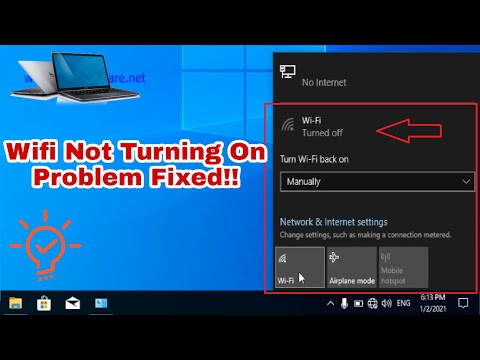
Within the Action Center, look for the "Wi-Fi" or "Network" tile. Click this tile. If the tile indicates that WiFi is disabled, click on it; this will turn it on. If it is already on, turn it off and turn it back on. This simple toggle can resolve a surprising number of connection problems. The act of disabling and re-enabling WiFi forces a refresh of the connection, akin to rebooting your laptop but in the digital realm. This action often resolves issues caused by temporary glitches or conflicts.
If the WiFi connection remains unresponsive after clicking on the network tile, the Action Center contains another, more potent weapon. Click on "Troubleshoot" within the Action Center. Windows will initiate a diagnostic process, automatically scanning for and attempting to fix any detected network-related problems. This automated troubleshooting tool is surprisingly effective. It performs a series of checks, identifying potential issues such as mismatched network settings, corrupted drivers, or conflicts with other software and attempting to resolve them automatically. Allow the troubleshooter to run its course and follow any on-screen prompts. Often, it will detect the source of the problem and remedy the issue.
Delving Deeper: Driver Considerations
In the event that the Action Center's troubleshooting endeavors prove unsuccessful, it's time to scrutinize your network drivers. Drivers are software programs that enable your laptop's hardware components (in this case, the WiFi adapter) to communicate effectively with the operating system. Outdated, corrupted, or missing drivers can be a significant cause of connection problems.
Access Device Manager. You can access the Device Manager by searching for it in the Windows search bar, by right-clicking the Start menu, or by opening the Control Panel. Once the Device Manager opens, you will see a list of all the hardware components installed in your system. Look for "Network Adapters" and expand that category. Within "Network Adapters," you should find your WiFi adapter, often identified by its manufacturer (e.g., Intel, Realtek, Broadcom) and a reference to "Wireless" or "WiFi."
Right-click on the WiFi adapter to open a context menu. From this menu, select "Update driver." Windows will automatically search for updated drivers online and install them. If Windows fails to find an updated driver, you can manually download the latest driver from the HP support website. First, you'll need to find the specific model of your HP laptop. This information can typically be found on a sticker on the underside of the laptop or by accessing your system information (search "System Information" in the Windows search bar).
Once you have your laptop model number, go to the HP support website and search for the model. Locate the "Drivers and Downloads" section and select your operating system. A list of available drivers will appear. Find the driver for your WiFi adapter and download it. Once the driver is downloaded, run the installation file and follow the on-screen instructions. A restart will be required for the driver to take effect.
Router-Related Remedies: A Network Perspective
Though the root of the problem frequently resides within the laptop itself, the router, the gateway to your internet connection, can be a source of issues. Consider your router as the control center for your home network. Network congestion is a common source of WiFi failures. If multiple devices are simultaneously consuming bandwidth (streaming video, downloading large files, etc.), this congestion might impact your laptop's ability to establish a stable WiFi connection, essentially causing a bottleneck. Try disconnecting other devices from the network temporarily to isolate your laptop's connection.
Next, ensure your router's firmware is up-to-date. Firmware is the software embedded within your router that governs its operation. Outdated firmware can harbor bugs and security vulnerabilities that can potentially disrupt your WiFi connectivity. Check your router's user manual or the manufacturer's website for instructions on updating the firmware. This process typically involves logging into your router's administration panel (usually accessible via a web browser by entering the router's IP address) and navigating to the firmware update section.
Finally, examine your router's settings, specifically the channel selection. WiFi utilizes radio frequencies, and routers operate on different channels to avoid interference. Consider the environment where your router is located. If you live in a densely populated area with numerous other WiFi networks, or if your laptop or router is near other electronic devices that can cause interference, your WiFi signal can be disrupted. You can use a WiFi analyzer app on your smartphone or another device to identify which channels are less congested, then manually configure your router to use those. You can use your router's administration panel to change the channel settings.
Advanced Troubleshooting: A Cautious Approach
Should the previous steps fail to resolve the issue, consider these more advanced troubleshooting methods. These steps may require a more in-depth understanding of computer networking concepts.
First, consider resetting your network settings. This will erase any customized network configurations and revert to the default settings. To reset network settings, go to Settings -> Network & Internet -> Network reset. This will remove and reinstall your network adapters and set other networking components back to their original settings. After the computer restarts, try connecting to your WiFi again. Next, consider a complete system restore. This will restore your computer to a point in time when your WiFi was working correctly. Keep in mind that you'll usually lose all apps and software that were installed between the restore point and your computer's current state. Before using system restore, make sure that the computer has restore points set. Click the Windows start button, type "create a restore point," and select the option. Click "System Restore…" and follow the on-screen instructions. You must select a restore point before your WiFi issues began. This is a powerful tool that can reverse any recent software or driver changes that may be causing the problem. If all else fails, it might be a hardware issue. Contact HP support. They are equipped to provide expert guidance and, if necessary, arrange for repairs, or if your laptop is still under warranty, have it replaced. The Ultimate WiFi Restoration Checklist: A Synopsis
Let us recap the critical steps to reclaiming your WiFi and ensure your HP laptop is back online:
- Initial Assessment: Check the physical WiFi button on your laptop. Ensure WiFi is enabled in the operating system's network settings. Verify your proximity to a known WiFi network.
- Action Center Activation: Click the Action Center icon, turn on or off the WiFi tile. Utilize the Troubleshoot function.
- Driver Scrutiny: Access Device Manager, update or reinstall your WiFi adapter drivers. Download drivers from the HP website, if necessary.
- Router Rituals: Restart the router and modem. Check the router's status lights.
- Advanced Recovery: Reset network settings; perform a system restore; contact HP Support if issues persist.
By diligently following these steps, you'll be well-equipped to confront and conquer those frustrating HP laptop WiFi dilemmas, transforming digital frustration into seamless connectivity. Armed with these troubleshooting tools, you're now ready to navigate the digital realm with confidence, knowing you have effective strategies to resolve any connectivity obstacles you might
