can internal laptop wifi card signal be boosted
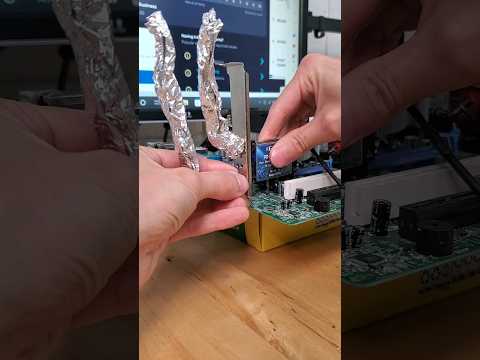
Title: can you use aluminum foil as a wifi antenna in your PC shorts
Channel: mryeester
can you use aluminum foil as a wifi antenna in your PC shorts by mryeester
Unlock Your Laptop's Wi-Fi: Insane Speed Boost Inside!
Unleash the Beast: Your Laptop's Wi-Fi Speed Supercharge Secret Revealed!
Imagine finally ditching the frustration of buffering videos and sluggish downloads. Picture your laptop, not just connected, but blazing through the internet like a digital cheetah. Well, stop imagining. That reality is closer than you think. We're about to dive headfirst into the world of optimizing your Wi-Fi connection. Prepare to witness a transformation.
Is Your Wi-Fi Connection Holding You Hostage?
Do you find yourself staring blankly at your screen? Is your patience wearing thin? Maybe your Wi-Fi is the culprit. Slow speeds can stem from hidden bottlenecks restricting your laptop's access. First, consider the age of your hardware. Old routers and outdated Wi-Fi cards can drag your experience down immensely. But you do not have to worry! There are solutions.
Your location within your home matters greatly. Obstacles like walls and appliances can significantly weaken the signal. Also, understand that other devices are constantly vying for bandwidth. That is why it is essential to troubleshoot. It is a necessary course of action.
Decoding the Digital Maze: Identifying the Speed Killers
Let's get down to the nitty-gritty of what slows things down. Before jumping, carefully consider these factors. Interference from other electronics is common. Microwave ovens, certain cordless phones, and even baby monitors can wreak havoc. Check for these. Also, consider the number of devices connected to your network. The more devices, the less bandwidth available to each.
Network congestion is another common problem. This occurs during peak hours when everyone in your household is online. Understand that at this point you will experience slow speeds. Next, investigate your laptop's Wi-Fi card drivers. Outdated drivers can create performance issues. Regularly updating them is vital. It will help you achieve optimal performance.
Rev Up Your Router: The Gateway to Gigabit Glory
Your router is the heart of your home network. Improving its performance is a game changer. Start by positioning your router strategically. Place it in a central, open location. This allows it to reach every corner of your home. Then, upgrade your router to the latest Wi-Fi standard. Wi-Fi 6 (802.11ax) offers faster speeds and improved efficiency.
Consider restarting your router regularly. This can clear temporary glitches. Also, secure your network with a strong password. This can prevent unauthorized access. Besides, ensure your router's firmware is up-to-date. Firmware updates often include performance enhancements and security patches.
Laptop Lean-Up: Optimizing Your Wireless Connection
Now, let's turn our attention to your laptop itself. It is important to make sure your laptop is up to the task. Ensuring your connection is optimized is vital. Begin by updating your Wi-Fi adapter drivers. These drivers can often bring noticeable improvements. Also, run a speed test to determine your current speeds. This helps pinpoint specific issues.
Consider disabling unnecessary background applications. Besides, these apps can consume bandwidth. If possible, connect your laptop directly to the router with an Ethernet cable. This typically provides the fastest and most stable internet connection. Similarly, consider replacing an outdated Wi-Fi adapter. A newer one can offer much faster speeds.
Beyond Blazing: Additional Performance Boosts
Want to go the extra mile? Fine-tuning your network can lead to even better results. You can try experimenting with different Wi-Fi channels on your router. Some channels experience less interference than others. Another option is to explore Quality of Service (QoS) settings. These settings can prioritize network traffic.
Consider limiting the number of devices. This method can improve speed. Finally, regularly check your Wi-Fi security settings. This way, you can ensure everything is working correctly. In effect, these steps can dramatically enhance your Wi-Fi speeds.
The Grand Finale: Hitting Ludicrous Speed!
So, there you have it! A complete guide to unlocking your laptop's Wi-Fi potential. By implementing these strategies, you can say goodbye to lag. You will be able to stream, download, and browse with unprecedented speed. Now, go forth and unleash the beast! Your digital life is about to get a whole lot faster.
Laptop WiFi Dead? 😱 FIX It NOW!Unlock Your Laptop's Wi-Fi: Insane Speed Boost Inside!
Hey there, tech enthusiasts! Ever feel like your laptop's Wi-Fi is stuck in the dial-up age while the rest of the world zooms by? You know, that feeling of sheer frustration when loading a simple webpage takes longer than brewing a pot of coffee? We’ve all been there! But guess what? We're about to embark on a journey to banish those Wi-Fi woes and unlock some insane speed boosts for your beloved laptop. Forget lagging videos and sluggish downloads; we’re talking about experiencing the internet at its full, glorious potential. Prepare to say goodbye to buffering and hello to blazing-fast browsing!
1. The Wi-Fi Whisperer's Introduction: Why Your Laptop Needs a Speed Makeover
Think of your laptop's Wi-Fi as a vital artery. It's the lifeline that connects you to the digital world. But, just like any artery, it can get clogged! And these "clogs" can manifest as slow speeds, dropped connections, and general internet misery. Honestly, who has time for that? We need speed! We crave it! And we’re going to get it. This isn’t about fancy tech jargon; it's about practical solutions that anyone can implement. Trust me, if I can do it (and I'm the furthest thing from a tech guru), you can too!
2. Decoding the Digital Language: Understanding the Core of Wi-Fi Speed
Before we dive into the nitty-gritty, let's get a handle on the basic building blocks. Think of Wi-Fi like a radio. Your router (the broadcasting station) sends out signals (the radio wave), and your laptop (the receiver) picks them up. Now, several factors can trip up this connection, thus directly impacting your Wi-Fi speed. Things like distance from the router, the type of router you’re using, interference from other devices, and even the physical layout of your home are all crucial pieces of the puzzle.
3. Router Renaissance: Picking the Right Arsenal for Wi-Fi Warfare
Your router is your Wi-Fi command center. It's the gatekeeper of your internet speed. Now, the default router that your internet service provider (ISP) provides may not be up to the task of delivering the lightning-fast speeds you're craving. That's why upgrading your router is often the first, and arguably the most impactful, step.
- Consider these points when selecting a new router:
- Wi-Fi Standards: Look for routers that support the latest Wi-Fi standards, such as Wi-Fi 6 (802.11ax) or Wi-Fi 6E, for faster speeds and better performance, especially in crowded environments.
- Dual-Band or Tri-Band: Dual-band routers broadcast signals on both the 2.4 GHz and 5 GHz frequencies. Tri-band routers add a second 5 GHz band, reducing congestion and increasing capacity.
- Range and Coverage: Make sure the router's range is sufficient for your home. External antennas can improve range.
- Guest Network Feature: This is a welcome inclusion when you are hosting guests.
4. Position Yourself to Win: Optimizing Your Router's Physical Placement
Where you place your router matters a lot. Think of it like planting a seed: the soil (location) determines how well it grows. Placing your router in the wrong spot can drastically reduce its effectiveness.
- Ideal Placement:
- Central Location: Position your router as close to the center of your home as possible. This ensures the signal reaches all corners.
- Elevated Position: Elevate your router off the floor, ideally on a shelf or table. This helps the signal travel more freely.
- Open Space: Avoid placing your router inside of cabinets, closets, or behind walls.
- Avoid Obstacles: Keep your router away from obstructions like metal objects, mirrors, and thick walls.
5. Channel Surfing: Tuning Your Router's Frequency
Just like radio stations, Wi-Fi routers operate on channels. When multiple routers in your neighborhood use the same channel, it leads to congestion and reduced speeds.
- How to Find the Best Channel:
- Check Your Router’s Settings: Most routers allow you to select the Wi-Fi channel. Access your router's settings via its IP address.
- Use a Wi-Fi Analyzer App (or Website): Tools such as "Wi-Fi Analyzer", available on both Android and iOS, can scan your network and identify the least congested channels.
- Experiment with Channels: Test different channels (especially on the 2.4 GHz band) to find the one that provides the best performance. Experiment with channel widths, too!
6. The Interference Inspectors: Minimizing Wi-Fi Enemies
Think of interference as the background noise that muddles your Wi-Fi signal. It can come from various sources, sabotaging your speed.
- Common Interference Culprits:
- Microwaves: These can interfere with the 2.4 GHz band.
- Bluetooth Devices: These also operate on the 2.4 GHz frequency.
- Cordless Phones: They use the 2.4 GHz band as well.
- Other Wi-Fi Routers: Overlapping networks can cause interference.
7. Time for a Reboot: The Simple, Sometimes Effective, Remedy
This might sound almost too simple, but sometimes a power cycle is all it takes. A reboot can clear out the cobwebs, refresh the connection, and often resolve temporary glitches that are slowing down your Wi-Fi.
- How to Reboot: Simply unplug your router (and modem, if you have one) for 30 seconds, plug it back in, and give it a few minutes to boot up.
8. The Firmware Factor: Keeping Your Router Up-to-Date
Your router's firmware (its internal software) needs to be up-to-date for optimal performance. Think of it like keeping your car’s software current, and you will avoid performance hiccups.
- How to Update Firmware:
- Check Your Router's Interface: Log into your router's administration panel and look for a "Firmware Update" section.
- Download and Install: If a new update is available, download and install it according to the provided instructions.
9. The Device Dilemma: Limiting Connected Devices
Every device connected to your Wi-Fi network "eats" a portion of your bandwidth. Yes, even your shiny new smart fridge! When your Wi-Fi is a shared resource, bandwidth is shared too. The more users active, the slower things get for everyone.
- Bandwidth Management Tips:
- Prioritize Important Devices: Most routers allow you to prioritize specific devices (like your laptop) to ensure they receive preferential access.
- Limit Simultaneous Streaming: Streaming multiple 4K videos simultaneously can cripple your network.
- Close Unused Apps: Background apps and processes can consume bandwidth.
10. Wired Wonders: The Ethernet Advantage
Let's face it: Wi-Fi, while convenient, can't always beat a wired connection. If ultimate speed and stability are your goals, consider connecting your laptop directly to your router via an Ethernet cable. This is the gold standard for gaming, large file transfers, and anything that demands a rock-solid connection.
11. Digging Deeper: Advanced Troubleshooting Techniques
If you've tried everything above and still aren't satisfied, it's time to get a little more technical.
- Run a Speed Test: Websites like Speedtest.net or Fast.com can measure your actual internet speed. This will help you determine whether the problem is your Wi-Fi or your internet connection.
- Check Your DNS Settings: Sometimes, the DNS servers your router uses can be slow. Try switching to a public DNS server, such as Google's (8.8.8.8 and 8.8.4.4).
- Factory Reset (Last Resort): As a last resort, you can reset your router to its factory settings. This will erase all your custom settings, so make sure you know your ISP login information.
12. Software Solutions: Keeping Your Laptop Clean
Believe it or not, the software on your laptop can also play a role. A cluttered system, malware, or outdated drivers can all contribute to slower Wi-Fi performance.
- Laptop Maintenance Essentials:
- Antivirus Software: Make sure you have a reliable antivirus program installed and updated.
- Driver Updates: Regularly update your Wi-Fi adapter drivers.
- Disk Cleanup: Free up disk space by removing unnecessary files.
13. Wi-Fi Extenders and Mesh Networks: Expanding Your Reach
If your Wi-Fi signal doesn't reach all areas of your home, consider using a Wi-Fi extender or, even better, a mesh network. Both solutions are designed to widen your coverage area.
- Wi-Fi Extenders: They rebroadcast the existing Wi-Fi signal, but they can sometimes reduce speed.
- Mesh Networks: These utilize multiple access points to create a seamless, high-
Boosting my Wi-Fi with an External Antenna science engineering wifi boost hack electronics

By GreatScott Boosting my Wi-Fi with an External Antenna science engineering wifi boost hack electronics by GreatScott
WiFI Card vs USB WiFi Adapter Check out this comparison

By ADVANTI WiFI Card vs USB WiFi Adapter Check out this comparison by ADVANTI
How Can I Boost My WiFi Card Signal - Your Computer Companion

By Your Computer Companion How Can I Boost My WiFi Card Signal - Your Computer Companion by Your Computer Companion

Title: How to fix slow internet shorts
Channel: kaansanity
How to fix slow internet shorts by kaansanity
Laptop Wifi Hotspot
Unlock Your Laptop's Wi-Fi: Insane Speed Boost Inside!
The internet, a boundless ocean of information and connection, courses through your veins daily. But what happens when that vital stream slows to a trickle, leaving you stranded in digital molasses? Frustration mounts, productivity plummets, and the simple joy of browsing vanishes. We understand. We've been there. And we're here to tell you: you don't have to suffer the indignity of sluggish Wi-Fi any longer. Within this comprehensive guide, we'll unveil a trove of secrets, hidden settings, and overlooked strategies designed to massively amplify your laptop's wireless performance. Prepare to witness your digital life transformed.
Diagnosing the Digital Dead Zone: Identifying the Wi-Fi Weak Links
Before we embark on the journey to blazing-fast Wi-Fi, a crucial first step is diagnosis. A thorough examination of your current setup is paramount. This isn't just about speed tests; it's about understanding why your connection is faltering. Is it your laptop? Your router? Or perhaps something entirely different?
Begin with the simplest checks. Is your laptop positioned optimally? Are you nestled in a Faraday cage of dense walls and interfering appliances? A quick relocation can often yield surprising results. Move your laptop closer to your router, experimenting with different positions within your space. Note any performance changes.
Next, consider the age of your hardware. Is your laptop a relic of the early 2000s, its Wi-Fi adapter struggling to keep pace with modern demands? Similarly, an aging router, especially one operating on older Wi-Fi standards (like 802.11n or, heaven forbid, 802.11g), could be the bottleneck. Consider upgrading your router to the latest Wi-Fi 6 (802.11ax) or Wi-Fi 6E technology for significantly enhanced performance. These advancements offer superior speeds, improved range, and the ability to handle numerous connected devices simultaneously—crucial for today's interconnected households and workspaces.
Finally, examine your environment. Are you surrounded by potential sources of interference? Microwave ovens, Bluetooth devices, and even certain types of building materials can wreak havoc on wireless signals. Experiment with repositioning your router, elevating it off the floor to improve signal propagation, and minimizing the presence of interfering electronics. Understanding these environmental factors is critical to identifying the root cause of your slow Wi-Fi woes.
Fine-Tuning Windows for Wi-Fi Supremacy: The Secret Settings Revealed
Windows, despite its user-friendly facade, hides a treasure trove of settings that directly impact your Wi-Fi performance. Accessing these hidden controls can unlock significant speed gains. We are going to unlock them now.
Firstly, ensure your laptop's Wi-Fi drivers are up-to-date. Outdated drivers are a common source of performance bottlenecks. To update your drivers, go to the Device Manager (search for it in the Windows search bar). Under "Network adapters," locate your Wi-Fi adapter (it might be labeled with the manufacturer's name, like Intel or Realtek). Right-click on it and select "Update driver." Choose "Search automatically for drivers" to let Windows find and install the latest version. Regularly checking and updating drivers is a low-hanging fruit that can yield significant results.
Secondly, delve into your Wi-Fi adapter’s advanced settings. Within Device Manager, right-click on your Wi-Fi adapter and select "Properties." Navigate to the "Advanced" tab. Here, you'll find a list of configurable parameters. Several settings are crucial for influencing performance.
- 802.11n/ac/ax mode: Select the latest standard supported by your router and your network. This setting dictates the wireless protocol your adapter will use. If your router supports Wi-Fi 6 (802.11ax), configure your adapter accordingly.
- Transmit Power: Set this to the highest level. This dictates the strength of the signal your laptop emits.
- Wireless Mode: Ensure it matches your router’s capabilities, often supporting multiple standards.
- Roaming Aggressiveness: Experiment with the aggressiveness level. Higher levels allow your laptop to maintain a stronger connection to the router, even if it means sacrificing some range. However, lower settings can improve performance in areas with interference or multiple access points.
- Preferred Band: If your router supports both 2.4 GHz and 5 GHz bands (and it should!), this setting allows you to guide your laptop toward the faster 5 GHz band.
Experiment with these configurations, making sure to apply changes after each adjustment. Remember to restart your laptop after making changes to your Wi-Fi adapter settings so they can take effect.
Router Optimization: The Central Command of Wi-Fi Performance
Your router isn't just a black box; it's the central nervous system of your home network, and its configuration directly affects your Wi-Fi speed. Optimizing your router settings, therefore, is a fundamental step in achieving peak performance.
Start by accessing your router's configuration interface. Typically, you can do this by typing your router's IP address (usually something like 192.168.1.1 or 192.168.0.1) into your web browser. Consult your router's manual if you are unsure of the exact IP address, though it can typically be found on a sticker on the bottom of the router itself.
Once logged in, you’ll encounter a range of settings. Here are some essential tweaks:
- Channel Selection: Your router broadcasts on a specific Wi-Fi channel. Multiple routers in your area broadcasting on the same channel can cause interference. Use a Wi-Fi analyzer app (available for both smartphones and laptops) to scan your local network and identify the least congested channel. Configure your router to use this channel.
- Bandwidth: Consider your router's bandwidth settings. If your router is older, it may utilize 20 MHz or 40 MHz channels. Newer routers support 80 MHz or, even better, 160 MHz channels on the 5 GHz band. Larger channel widths offer faster speeds. Ensure your laptop’s Wi-Fi adapter also supports these wider channels.
- Security Protocol: Use WPA3 encryption for the best security and performance. If your devices don’t support it, WPA2 is a good alternative. Avoid older, less secure protocols like WEP.
- Quality of Service (QoS): Many routers offer QoS settings, which prioritize bandwidth for specific devices or applications. If you’re a gamer or rely on video conferencing, consider enabling QoS and prioritizing these applications.
- Firmware Updates: Routers, like laptops, require regular firmware updates to address security vulnerabilities and improve performance. Check your router’s manufacturer's website for the latest firmware and install it promptly.
Beyond the Basics: Advanced Strategies for Maximum Wi-Fi Power
We've covered the core principles, but true Wi-Fi mastery requires a willingness to explore more advanced techniques. Here, we'll delve into strategies that can deliver even more impressive performance gains.
- Router Placement: While we've discussed optimal placement, sometimes more drastic measures are necessary. Consider the topology of your home. A central location, free from obstructions, is ideal. For larger homes, consider a mesh Wi-Fi system. These systems use multiple access points to provide seamless coverage throughout your space, eliminating dead zones and boosting overall performance.
- External Antennas (If Applicable): Some routers allow for the addition of external antennas. Upgrading antennas can significantly improve range and signal strength, especially if you live in an area with many interfering signals. Consult your router's manual to determine if external antennas are supported and compatible.
- Channel Bonding: Most modern routers support channel bonding, which combines multiple channels to provide even greater bandwidth. Ensure this feature is enabled in your router's settings.
- Isolate Your Network: If your network usage is high, consider segmenting your network. This involves creating separate networks (SSIDs) for different devices or purposes. For example, creating a guest network for visitors or a separate network for bandwidth-intensive devices, such as streaming devices.
- Monitor and Analyze: Regularly monitor your Wi-Fi performance. Use speed tests and monitoring tools to track your speeds and identify any recurring issues. This will help you optimize your setup over time.
The Payoff: Experiencing the Freedom of Lightning-Fast Wi-Fi
By diligently employing the strategies outlined in this comprehensive guide, you'll transform your laptop's Wi-Fi performance. No longer will you be hamstrung by sluggish connections. Expect to see:
- Faster Download and Upload Speeds: Experience the joy of rapid file transfers, instantaneous streaming, and lag-free online gaming.
- Increased Productivity: No more waiting for pages to load or videos to buffer. Focus on the task at hand.
- Seamless Connectivity: Say goodbye to dropped connections and unreliable Wi-Fi. Enjoy a stable and consistent experience.
- Enhanced Overall Experience: The internet, once a source of frustration, will become a source of pleasure.
We have equipped you with the knowledge needed to unlock your laptop's Wi-Fi and seize your digital destiny. Implement these techniques, experiment with the settings, and enjoy the boundless speed that awaits. The digital world, once a frustrating compromise, is now at your fingertips, ready to be explored at unprecedented speeds. Go forth, and experience the true power of the internet.
