hp laptop screen black caps lock blinking wifi orange
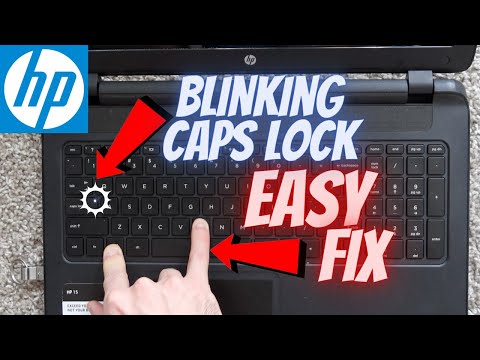
Title: Hp Laptop No Display Caps Lock Blinking FIXED BIOS Recovery Reinstall with USB
Channel: thecollegepicker
Hp Laptop No Display Caps Lock Blinking FIXED BIOS Recovery Reinstall with USB by thecollegepicker
HP Laptop Black Screen, Blinking Caps Lock? WiFi Orange? FIX NOW!
HP Laptop Black Screen Blues: Troubleshooting Your Tech Troubles
It's a dreaded moment. You power up your HP laptop, ready to conquer your digital tasks. Instead, you’re staring at a black screen. The Caps Lock key stubbornly blinks. To add insult to injury, your Wi-Fi indicator glows a menacing orange. Don’t panic. You are not alone. Many HP laptop owners face this frustrating scenario. This article provides a roadmap. It helps you get back up and running.
Decoding the Blinking Caps Lock: A Critical First Step
That blinking Caps Lock light isn’t just for show. It’s your laptop's way of communicating. It's speaking a secret language. The number of blinks signifies a specific error code. Consequently, it pinpoints the problem. So, grab a pen. Get ready to count.
- One Blink: This usually points to a CPU failure. This is usually the central processing unit.
- Two Blinks: Expect to examine the BIOS corruption. The BIOS is the Basic Input/Output System.
- Three Blinks: This often means a problem with the memory. The RAM modules are prime suspects.
- Four Blinks: Prepare for a graphics card issue. Sometimes the graphics card is integrated.
- Five Blinks: Inspect the system board for issues. The motherboard could be the culprit.
Troubleshooting Tactics: Actions To Take Right Now
Knowing the error code is handy. However, you need to act. You must take steps to resolve the issue.
The Hard Reset: This can clear away many glitches. Disconnect your laptop. Remove the battery (if removable). Press and hold the power button. Hold it for 15-30 seconds. Then, reassemble your laptop. Try powering it on.
Memory Check: If you suspect RAM, reseating the RAM modules is crucial. Open your laptop's access panel. Carefully remove and reinsert the RAM sticks. Make sure they are seated correctly. Then test your laptop.
BIOS Recovery (if applicable): If the Caps Lock blinked twice, you might need to recover the BIOS. This is a more advanced procedure. Consult HP's support website. There, you will find specific instructions.
External Monitor Test: Connect an external monitor via HDMI or VGA. If the external display works, the issue is probably with your laptop’s screen.
Wi-Fi Woes: Navigating The Orange Light
An orange Wi-Fi light is a different beast. It often signifies a connection problem. It suggests the Wi-Fi isn't working as intended. Several factors can contribute.
Check Physical Connectivity: Ensure Wi-Fi is enabled on your laptop. There is often a physical switch. Look for a wireless button on your keyboard (often a plane symbol).
Restart Your Router: This classic troubleshooting step resolves a multitude of network problems. Unplug your router and modem. Wait a minute or two. Plug them back in. Give the router time to reboot. Try connecting again.
Troubleshoot Your Network: Open Windows Settings. Navigate to Network & Internet. Run the troubleshooter. It can often identify and fix common network issues.
Driver Updates: Outdated Wi-Fi drivers can cause issues. Go to the Device Manager. Expand “Network adapters.” Right-click on your Wi-Fi adapter. Select “Update driver.”
Beyond the Basics: Advanced Solutions
Sometimes, the solutions are more complex. You might need to delve deeper. Here's a look at some advanced methods.
System Restore: If the issues started recently, use System Restore. This reverts your system to an earlier state. Hopefully, you can eliminate whatever is causing the problem.
Safe Mode: Boot your laptop into Safe Mode. This loads a minimal set of drivers. If the problem is resolved in Safe Mode, it suggests a software conflict.
Hardware Diagnostics: HP laptops have built-in hardware diagnostic tools. Access these tools during startup (usually by pressing Esc or F2). Run a thorough test.
When to Seek Professional Help:
If none of the above steps work, it's time for professional intervention. The problem could be a hardware failure. Consider these options:
- HP Support: Contact HP support directly. They can offer further assistance and possibly guide you through additional troubleshooting steps.
- Authorized Repair Center: Take your laptop to an authorized HP repair center. Skilled technicians will have the experience. They can diagnose and fix complex hardware issues.
- Data Backup (Important): Before taking your laptop in for repair, back up your data. This critical step protects your important files.
Final Thoughts: Keeping Your Laptop Running Smoothly
Dealing with a black screen and Wi-Fi problems is frustrating. Nevertheless, with patience and these steps, you can often resolve the issues. Remember to: Count the Caps Lock blinks. Try the troubleshooting steps. Seek professional help if needed. Regular maintenance helps. Keep your drivers updated. Run regular scans. Back up your data. Your HP laptop will likely give you many years of service.
Laptop to TV Wireless: The ULTIMATE Guide (No Cables!)HP Laptop Black Screen, Blinking Caps Lock? WiFi Orange? FIX NOW!
Alright, let's be honest, staring at a lifeless black screen on your HP laptop is like gazing into the abyss. It’s a digital void, a stark reminder of the modern apocalypse where our connection to the world is, for a moment, severed. Add a blinking Caps Lock light, and your heart might just skip a beat – especially when your WiFi light stubbornly glows orange. It's a symphony of tech terror, a glitchy ballad of frustration. But, breathe easy, because we've all been there (and maybe, just maybe, I've shed a tear or two myself when it happened to me during a crucial deadline!). We're here to untangle this mess and get you back online, pronto. Think of us as your digital firefighters, rushing in to extinguish the flames of tech despair.
1. The Dreaded Black Screen: A Prologue of Problems
First things first. The dreaded black screen. It can signal a multitude of sins, from corrupt system files to hardware hiccups. It's the stage upon which all your panic performs its chilling dance. The blinking Caps Lock light? That's the stage manager, trying to give you a clue. And the orange WiFi light? That's the orchestra, silently playing a melancholic tune of lost connectivity. Before we start throwing fixes at the problem, let's understand the possible culprits. Is this a recent phenomenon? Did you update anything just before this happened? Did you perhaps… gulp… spill something on your keyboard (been there, done that… more than once)? Understanding the history of the problem helps us diagnose the ailment.
2. Decoding Blink Codes: What's Your Caps Lock Telling You?
The blinking Caps Lock light often holds the key to the puzzle. It's a digital Morse code, a series of blinks and pauses that correspond to specific error codes. You'll need to consult your specific HP laptop model's manual or look online (using another device, obviously!) to decipher the code. But it’s probably one of the following, such as a CPU issue, a memory problem, or a display malfunction. Think of it as your laptop’s SOS signal. It’s trying to tell you something, but you need the right translator.
3. The WiFi Orange Light: A Tale of Two Signals
The orange WiFi light is a visual representation of your connectivity woes. It can mean your laptop isn't connecting to your network, or it's having trouble communicating. Is the WiFi turned on? Are you within range of your router? Are other devices connecting? If other devices are working fine, then the blame lies directly on your HP laptop. If you are in range, but it's still orange, it's like a stubborn teenager refusing to get out of their room.
4. The Reboot Ritual: Your First Line of Defense
Probably the most simple, yet frequently effective solution. It's the tech equivalent of a deep breath. Try a hard reboot: Press and hold the power button for about 15 seconds. Wait a minute, then turn it back on. Sometimes, this simple act can kickstart the system and bring everything back to life. Consider it your digital reset button.
5. The Power of Patience: Checking the Hardware
Let's eliminate some potential hardware gremlins. Start by checking your power supply. Is the adapter plugged in securely? Is the outlet working? A loose connection could be the culprit. Are there any exposed wires? If you still suspect a hardware issue, then you’ll need some more advanced troubleshooting that can uncover faulty RAM or storage.
6. Entering Safe Mode: Your Digital Fortress
Safe Mode is your laptop’s emergency shelter. It allows you to boot up with minimal drivers and services, which can help you pinpoint the source of the problem. If the black screen disappears in Safe Mode, the issue is likely with a driver or software conflict.
- How to enter Safe Mode: Restart your laptop and repeatedly press the F8 key (or sometimes F11 or Esc, depending on your model) during startup. This will usually bring up the Advanced Boot Options menu. Choose “Safe Mode.”
- What you can do in Safe Mode: Once in Safe Mode, you can try uninstalling recently installed drivers or software, or running a system restore.
7. Driver Drama: The Usual Suspects
Faulty drivers can easily throw your system for a loop. Common culprits include display drivers, network drivers, and chipset drivers. In Safe Mode, try uninstalling and reinstalling the drivers for your graphics card and WiFi adapter. You can download the latest drivers from the HP website. If the display is still black, it's likely a hardware issue.
8. Rolling Back the Clock: System Restore
System Restore is your time machine. It allows you to revert your system to a previous state, potentially undoing any changes that might have caused the problem.
- How to use System Restore: Search for “System Restore” in the Windows search bar. Choose a restore point that was created before the problem started. Follow the on-screen instructions
9. Network Troubleshoot: Taming the Orange Beast
If the WiFi light is still orange, troubleshoot your network connection.
- Check your router: Restart your router. Is it showing all lights green?
- Forget and reconnect to the WiFi: In your WiFi settings, “forget” your network, then reconnect, re-entering the password.
- Run the Network Troubleshooter: Windows has a built-in troubleshooter that can diagnose and fix common network problems.
10. The BIOS Basics: A Look Under The Hood
Sometimes, a BIOS update can resolve compatibility issues. However, this is a more advanced step and should be done with caution. Make sure you know your laptop model, and download the BIOS update directly from the HP website. Be sure to follow the instructions to avoid damaging your system.
11. Internal Inspection: The Hardware Deep Dive
If all else fails, you might need to take a closer look at the hardware. This is where it gets a bit more technical. It might be time to open up your laptop (carefully!) and check for loose connections or damaged components. Make sure your laptop is unplugged from the power source.
- Memory (RAM): Reseat or test the RAM modules.
- Hard Drive/SSD: Check for any visible damage.
- Display Cable: Ensure all connections are firm.
(If you're not comfortable with this, it's time to seek professional help!)
12. The Ultimate Test: Using an External Display
Connect your laptop to an external monitor. If the display does work on the external monitor, the problem is likely with your laptop's screen or its associated hardware (like the display cable or the integrated graphics card). If the external monitor is also blank, the problem is more likely to be related to a more serious issue.
13. Backups and Boot Disks: Planning for the Worst
Is your laptop still not working? Start thinking about data recovery. Do you have a backup? A faulty hard disk might mean losing everything, so a backup will be crucial. If you don’t, you can back up your files using a bootable USB drive with recovery tools.
14. Professional Help: The Tech Savvy Cavalry
Sometimes, despite our best efforts, the problem persists. When everything else fails, it’s time to call in the professionals. Take your laptop to a certified HP repair center. They have the tools and expertise to diagnose and fix complex hardware problems. Think of them as the tech-savvy cavalry, riding in to save the day.
15. Prevention Is Key: Keeping the Demons at Bay
Once your laptop is back in working order, it's time to take preventative measures to avoid this scenario in the future.
- Keep your system updated: Install the latest Windows updates, driver updates, and anti-virus software.
- Regular Backups: Back up your important files regularly.
- Avoid Suspicious Software: Be cautious about downloading software from untrusted sources.
- Handle with Care: Avoid dropping your laptop or exposing it to extreme temperatures or moisture.
In Conclusion: Conquer the Digital Darkness!
So, there you have it: a comprehensive guide to troubleshooting your HP laptop's black screen, blinking Caps Lock, and orange WiFi light. Remember, patience is key. Don't panic. Work systematically through these steps, and you'll be back online in no time. Just picture your laptop as a car. Sometimes it needs an oil change (reboot), tune-up (driver updates), or even a new engine (professional repair). And remember, even if you’re not a tech genius, you’re capable of figuring things out. You’ve got this! We’ve all been there, and we are here to help. Now get back to what you were doing before the digital darkness consumed you!
FAQs
1. My Caps Lock isn't blinking – but the screen is still black. What's up?
Even without a blinking light, a black screen can be caused by memory issues or graphics card failures. Try the reboot ritual, check the external monitor, and try the System Restore. If the problem persists, you might be dealing with a more serious hardware issue.
2. My WiFi light is orange, and other devices connect to the internet. What should I do?
If other devices are connecting to your network
Dell Laptop WiFi: The SHOCKING Fix You NEED!hp elitebook 820 Power and caps lock LEDs blinking solution

By KH COMPUTERS hp elitebook 820 Power and caps lock LEDs blinking solution by KH COMPUTERS
CAPS LOCK FLASHING HP LAPTOP shorts tech laptop pcrepair

By Matt's Computer Services CAPS LOCK FLASHING HP LAPTOP shorts tech laptop pcrepair by Matt's Computer Services
hp laptop power button light and keyboard light blinking continuously - Hp Elitebook 840 G1 On Off

By info topic hp laptop power button light and keyboard light blinking continuously - Hp Elitebook 840 G1 On Off by info topic

Title: Hp EliteBook 725 Display issue Fix Caps lock and NumLock Blinking fix
Channel: KH COMPUTERS
Hp EliteBook 725 Display issue Fix Caps lock and NumLock Blinking fix by KH COMPUTERS
Wifi Not Found
HP Laptop Black Screen, Blinking Caps Lock? WiFi Orange? FIX NOW!
Staring into the abyss of a black screen on your HP laptop, witnessing the unsettling flicker of the Caps Lock key, and noticing that ominous orange glow emanating from your Wi-Fi indicator? You're not alone. This digital distress is a common lament, a frustrating hurdle that can impede productivity and disrupt your digital life. But fret not, for this comprehensive guide acts as your personal triage, steering you through the troubleshooting landscape to diagnose the root cause and, critically, offer actionable solutions to resurrect your beleaguered HP laptop. Prepare to become your own tech savior.
Decoding the Blinking Caps Lock: Unmasking the Hidden Signals
The blinking Caps Lock key on your HP laptop isn't just a random flicker; it's a coded message, a digital distress signal that's speaking volumes about your system's health. Hewlett-Packard, in its wisdom, has imbued these blinks with meaning, assigning distinct patterns to signify specific hardware malfunctions. Decoding these patterns is the crucial first step in your recovery journey.
Two Blinks: This often points to a critical failure concerning your System BIOS (Basic Input/Output System). The BIOS, the foundational software that initializes your hardware during startup, is either corrupt, missing, or experiencing a critical malfunction. This is a serious issue that demands immediate attention, particularly if a BIOS update was recently interrupted or incorrectly applied.
Three Blinks: The three-blink sequence typically flags a RAM (Random Access Memory) issue. The RAM is your laptop's short-term memory, the workspace where running applications store the data they need to function. If the RAM is faulty, improperly installed, or incompatible, this blink code will manifest.
Four Blinks: This indicates a graphics card (GPU) or video memory problem. Your GPU is responsible for rendering the images you see on your screen, and if it's failing – either due to physical damage, overheating, or driver issues – this blink code will be your warning.
Five Blinks: The five-blink code usually signals a problem with your laptop's CPU (Central Processing Unit), the brain of your computer and the component that handles all operations.
Six Blinks: This generally flags a BIOS authentication failure. This could be caused by a corrupt BIOS or a problem with the BIOS security chip.
Step-by-Step Troubleshooting: Restoring Your Laptop's Life
Now that you've identified the potential culprit via the Caps Lock blink code, it's time to roll up your sleeves and get to work. This section provides a detailed, actionable guide to tackle these issues head-on.
Addressing the BIOS Failure (Two Blinks):
Power Drain: Completely disconnect your HP laptop from any power source (charger and battery). Press and hold the power button for a full 30 seconds. This drains any residual electrical charge, sometimes resolving minor BIOS glitches.
Hard Reset: This is a more aggressive reset. After draining the power, remove the battery (if removable, consult your laptop's manual). Press and hold the power button for another 30 seconds. Reinstall the battery (if applicable) and plug the laptop back in. Attempt to power on your laptop.
BIOS Recovery (if possible): Many HP laptops are equipped with a BIOS recovery mechanism. If the BIOS is corrupted but the system can still partially boot, this will often be an automatic process. On many models, this triggers itself, allowing the system to restore the BIOS from a recovery partition. Check your specific HP laptop's user guide for the precise button combination to manually trigger this (often involves pressing the Windows key + B, or the ESC key during startup).
USB Recovery (advanced): If the recovery partition fails, you will need to use a USB drive containing a fresh BIOS copy (downloaded from HP's website, specifically for your laptop model). This is a more complex process that often involves creating a bootable USB drive and following specific instructions for your laptop model. Ensure that you are using the correct BIOS version for your specific model and that you do not interrupt this process.
Tackling RAM Issues (Three Blinks):
Reseat the RAM: With the laptop powered off and unplugged (battery removed if possible), locate the RAM access panel (consult your laptop's manual). Carefully open the panel and remove the RAM sticks. Clean the gold connectors on the RAM sticks gently with a dry, lint-free cloth. Reinsert the RAM sticks, ensuring they're securely latched in place. Try starting your laptop.
Test Alternate RAM Slots: If you have multiple RAM sticks, try booting the laptop with only one stick installed at a time, in different slots. This will help you isolate a faulty RAM stick or a problematic RAM slot.
Replace RAM: If the RAM sticks are confirmed to be faulty (through testing), you'll need to replace them. Ensure the new RAM is compatible with your laptop model (check the specifications on the HP website or in your laptop's manual).
Fixing Graphics Card/Video Memory Problems (Four Blinks):
External Monitor Test: Connect your HP laptop to an external monitor. If the display appears on the external monitor, the problem lies with your laptop's screen or its video cable.
Driver Reinstallation (if accessible): If you can access the system – even temporarily – boot in Safe Mode (repeatedly press F8 or Shift+F8 during startup). Go to Device Manager and uninstall your graphics drivers. Then, download and install the latest drivers from the HP website (for your specific model).
Hardware Examination: Physically inspect the inside of your laptop (once again, after unplugging and removing the battery). Look for signs of physical damage to the graphics card (soldered to the motherboard on many models) or its associated components.
Motherboard Repair/Replacement: Graphics card problems frequently lead to motherboard-related repairs, which are best undertaken by an experienced technician.
Addressing CPU Failures (Five Blinks):
- Overheating Prevention: Ensure your laptop's cooling system is functioning correctly. Clean out dust from the fan vents. Consider using a cooling pad.
- Motherboard Inspection: In many laptops the CPU is soldered to the motherboard, and the issue would require the motherboard to be repaired or replaced.
Correcting BIOS Authentication Failures (Six Blinks):
- BIOS Recovery: Re-attempt the BIOS recovery steps, focusing on the USB recovery process. Ensure the BIOS update file is correctly downloaded and prepared on the USB drive.
- Contact HP Support: If the issue persists, it's often a hardware-level problem. Contact HP support for professional assistance.
The Orange WiFi Indicator: Unveiling Internet Connectivity Issues
The orange Wi-Fi indicator, on your HP laptop, indicates a problem with your wireless network connection. The orange light means the device is connected to a network but may not have internet access. It's a common symptom, and troubleshooting it is often straightforward.
Basic Troubleshooting:
Restart Your Router and Modem: Often, the simplest solutions are the most effective. Unplug your router and modem, wait 30 seconds, and plug them back in. Allow them to fully boot before attempting to reconnect.
Check Your Network Cable Connection: If you are using a wired connection, ensure the Ethernet cable is securely plugged into both your laptop and the router. Also, check the cable for signs of damage.
Run the Windows Network Troubleshooter: Windows has a built-in troubleshooter that can often identify and fix common network problems. Go to Settings > Network & Internet > Status, and run the troubleshooter.
Advanced Diagnostics:
Check Your Wi-Fi Network Name (SSID) and Password: Double-check that you're connecting to the correct Wi-Fi network and that you're entering the correct password. Case sensitivity matters.
Check for IP Address Conflicts: Sometimes, another device on your network may have the same IP address as your laptop. Go to the command prompt (search for “cmd”) and type:
ipconfig /releaseand thenipconfig /renew. This will usually resolve the problem.Update Your Wi-Fi Driver: Outdated or corrupted Wi-Fi drivers can cause connectivity issues. In Device Manager, expand "Network adapters," right-click your Wi-Fi adapter, and choose "Update driver." Select "Search automatically for drivers." You should also consider downloading the latest driver from the HP website specifically for your laptop model.
Check Your DNS Settings: Incorrect DNS settings can prevent you from accessing the internet, even if you're connected to the network. Go to Settings > Network & Internet > Change adapter options. Right-click your Wi-Fi adapter, select “Properties,” then double-click "Internet Protocol Version 4 (TCP/IPv4).” Select “Use the following DNS server addresses,” and enter the Google DNS servers: 8.8.8.8 and 8.8.4.4
Firewall and Antivirus Interference: Sometimes, your firewall or antivirus software may be blocking your laptop's connection to the internet. Temporarily disable your firewall and antivirus to see if this resolves the issue.
Clean the Wi-Fi antenna contact area.
